










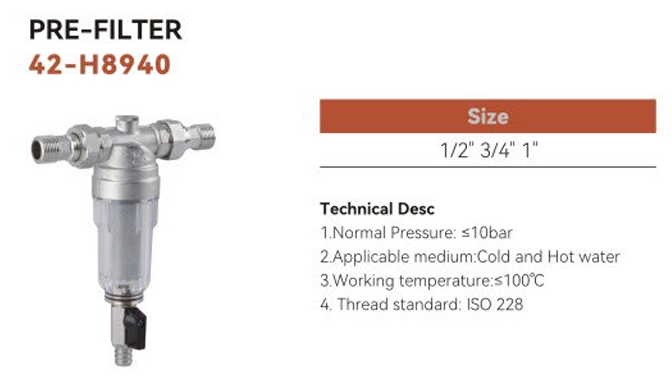
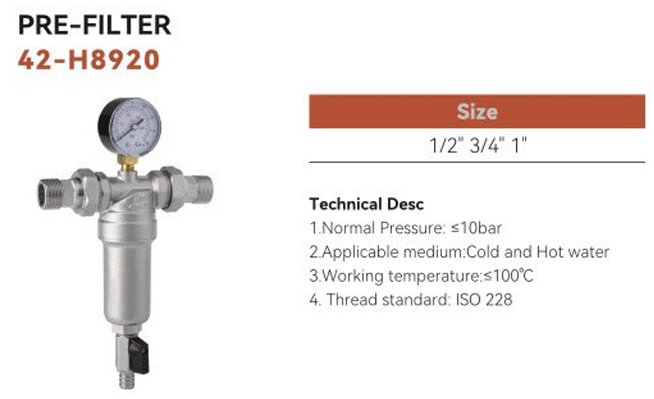
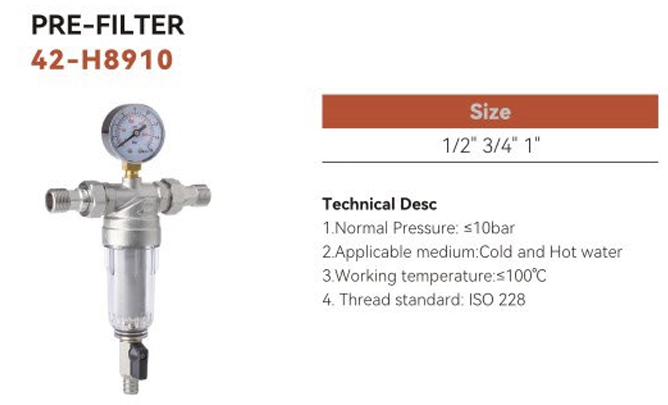
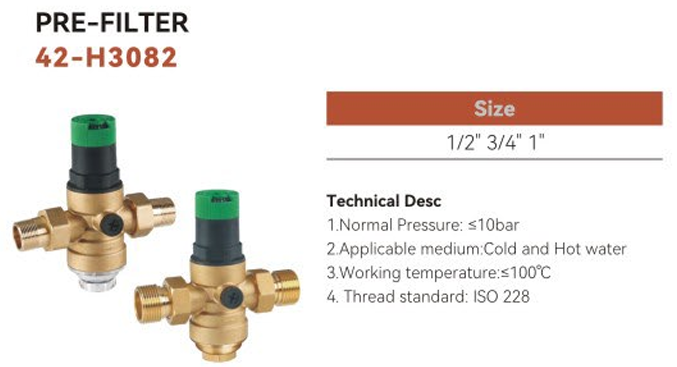
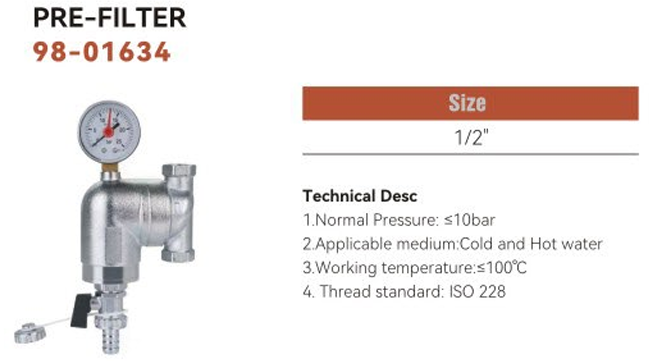
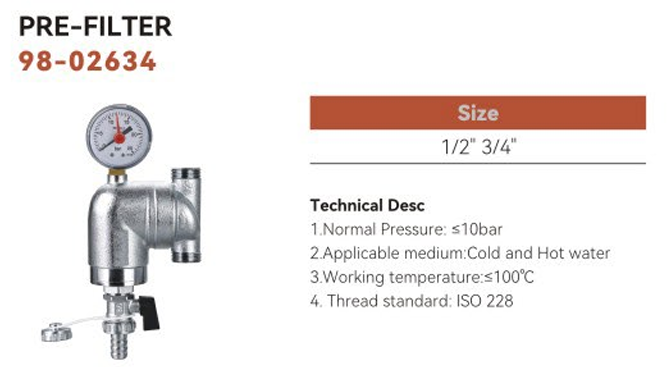
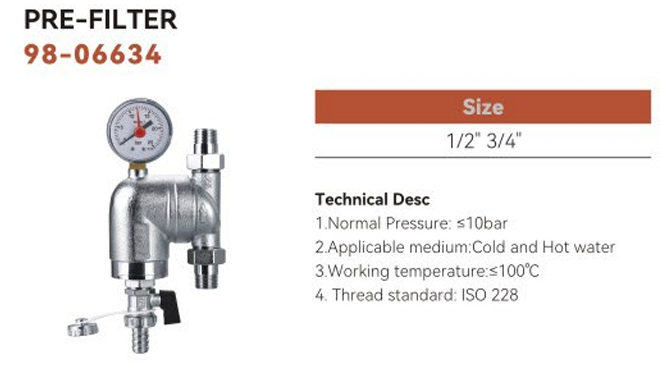

Pressure Gauge: The gauge at the top allows you to monitor the internal pressure. A significant drop in pressure compared to the inlet pressure is often a clear indicator that the filter screen is clogged with sediment and requires cleaning.
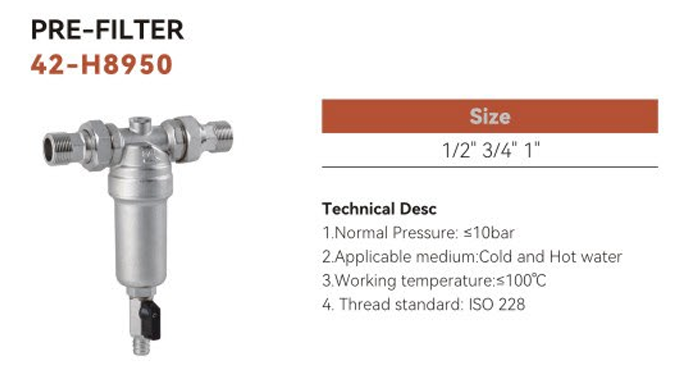
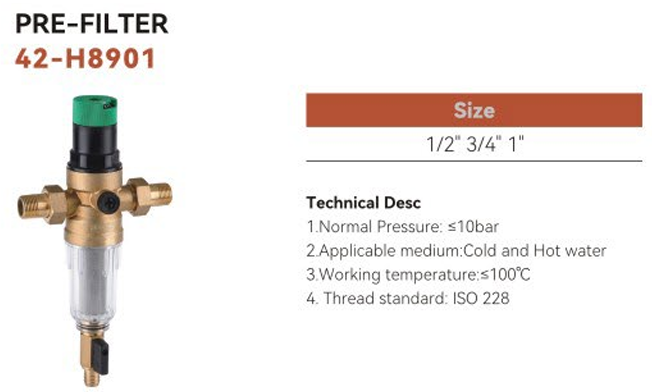
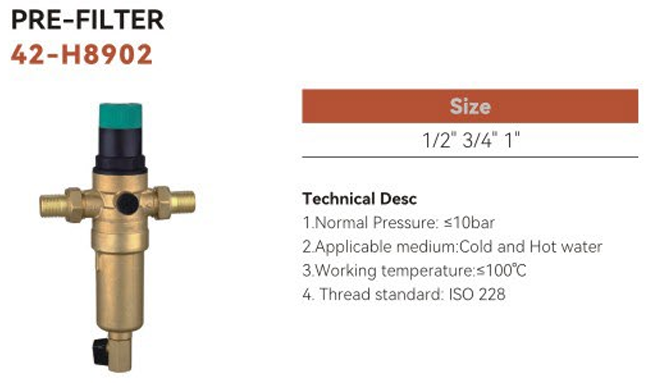
Integrated Ball Valve: The black handle at the bottom operates a drain valve. This allows you to perform a "backwash" or flush to clear trapped debris out of the filter housing without needing to disassemble the entire unit.
Body Construction: Typically made of brass or stainless steel, these units are designed to withstand high pressure and resist corrosion in water supply lines.
How It Functions
Filtration: As water enters the device, it passes through an internal stainless steel mesh screen that captures sand, rust, silt, and other coarse particulates.
Protection: By catching these particles early, it prevents them from damaging downstream appliances, sensitive control valves, or finer filtration systems like Reverse Osmosis membranes.
Maintenance: When the pressure gauge indicates a restriction, you simply open the bottom ball valve to flush the debris out of the drain port, restoring proper flow.
Reviews & Ratings
Frequently Bought Products